
Child & Teen Mental Health: Why Children's Behaviour Makes More Sense When We Understand Their Emotional Needs
Maybe you’ve noticed that your child gets upset easily. They break down in tears over the smallest things. They pull away and become silent. Or they suddenly become clingy. Restless. They have trouble sleeping. They return to behaviours you thought they had outgrown long ago.
It's worrying. It's frustrating. But, most of the time, these are just normal parts of growing up. It seems like we sometimes forget that adults don't have an exclusive right to rough days. Children can have difficult days, too.
Still, if you're a parent, you will probably, at some point, ask yourself: Is this just a phase, or should I be worried? Of course you have doubts. Of course you worry. That's what parents do.
But you don't have to make sense of this alone. Children and teen counselling at Canopy Cove can be a safe place for your child and your family. Together, we explore what lies beneath your child's behaviour, and what signs deserve attention. We help your child make sense of their emotions and express what they have not yet been able to put into words.
Canopy Cove Counselling helps families reconnect, rebuild a sense of emotional safety, and strengthen the bond that supports children's healing and growth.
Child & Teen Mental Health: What is Your Child's Behaviour Trying to Tell You
A child will rarely tell you when they are struggling. You probably won’t hear them say, "I'm anxious about school starting," or "I'm struggling with loneliness and sadness."
But there will be signs.
A two-year-old who throws tantrums. Everywhere. A first-grader who suddenly needs much more of your presence, as if they were three years old again. A ten-year-old who constantly asks, "What if...?" and has a really hard time being away from you. A teen who goes quiet for days. Starts losing weight. Spends too much time away from home. You start getting calls from the school. Every conversation turns into an argument.
You ask yourself, "Is this normal? Does my child need more discipline? Are they in pain? Is it anxiety or depression? ADHD? Do we need help?" You catch yourself observing them, looking for signs of emotional distress. You feel like you don't know what to do to make things better. You may even feel like you've failed as a parent.
Of course you feel this way. We all struggle as parents, never quite sure whether what we're doing or how we're parenting is right.
You don't have to fix everything for your child right away. In fact, you shouldn't try to. But what you can do is understand that these behaviours may be signs that your child is hurting. That they need to feel seen. That they need you to feel safe.
Looking Beyond the Behaviour

Children rarely act out for no reason. They often cannot explain how they feel or what they need. Younger children may simply not have the words to describe what's going on inside them. They are not yet fully aware of their inner world or how it shows in their behaviour. Teens and young adults may not be willing to share how they feel either because they worry their vulnerability will be seen as a weakness or because talking about their feelings simply feels too personal.
So, they often use their behaviour to tell us what they need or how they feel. And the biggest question to ask yourself is not, "How do I fix his behaviour?" It's: "What is this behaviour trying to protect?"
Even when they don't say it out loud, children's minds are constantly flooded with questions such as, "Am I safe?" "Do you understand how I feel?" "Can I turn to you when I feel overwhelmed?" "Will you stay with me?"
When children feel uncertain about the answers to these questions, it can show in their behaviour.
Sometimes a Child Isn't Being Difficult. They're Feeling Unsafe
When a child feels unsafe or emotionally overwhelmed, their nervous system may respond in different ways. Some children fight. Others flee, freeze, or fawn. These are natural survival responses our nervous system uses to protect us whenever the brain detects danger. If a child has experienced trauma, even seemingly harmless situations like being left at school can trigger these responses because their nervous system senses danger (even when they are actually safe).
Fom the outside, this may look like:
anger or defiance (fight)
anxiety, avoidance, or perfectionism (flight)
withdrawal or shutting down (freeze)
people-pleasing or always trying to keep everyone happy (fawn)
Each of these behaviours can be understood as an attempt to manage overwhelming emotions. So, instead of asking, "How do I stop this behaviour?" ask yourself, "What is this behaviour trying to tell me?"
What Emotional Safety Looks Like: Connection Before Correction
When the nervous system feels overwhelmed, logical conversations and reasoning usually don't work. Children and teens don't act out because they are difficult, but because their brains are still developing. The prefrontal cortex, the part of the brain responsible for emotional regulation and impulse control, doesn't fully mature until the early twenties. An overwhelmed child will not respond to reasoning and logical explanations because, in those moments, their brain shifts into survival mode. Every parent who has ever tried to correct their child's behaviour or calm them with "stop crying" or "calm down" will understand this.
What children need first is to feel safe. Once they feel emotionally safe, they become more able to calm themselves, listen, and cooperate.
So, what can you do instead?
Say, "I see you're very angry right now." "It's okay. "I'm here with you. "We'll get through this."
These are safety signals that help your child's nervous system gradually settle.
Connecting with your child doesn't mean being permissive or letting them have their way. It doesn't mean abandoning limits. Connecting before correcting sends their nervous system the message, "It's okay. You're safe."
And that's co-regulation. You calm yourself down first. You talk slowly and calmly. You hug your child. You use reassuring and validating words. This way, you lend your child your calm presence, helping them gradually learn to regulate their emotions on their own. And only then does change become possible.
When Trauma Doesn't Look Like Trauma
When they hear the word "trauma," most people think of major traumatic experiences such as sudden loss, severe accidents, violence, or natural disasters.
But trauma isn't always something dramatic.
Sometimes, it looks like a parent's divorce. Ongoing conflict at home. Bullying. Chronic stress. Repeated medical procedures a child or family member has to undergo.
A child can easily become emotionally overwhelmed when they are carrying unresolved trauma. Even the most well-meaning parents don't always recognize it. Instead, they respond to the behaviour with consequences. The child then feels misunderstood, which often makes the challenging behaviour even worse. Before long, everyone feels frustrated and emotionally disconnected.
Please don't be too hard on yourself. You're not trained to recognize trauma. But you can always turn to someone who is.
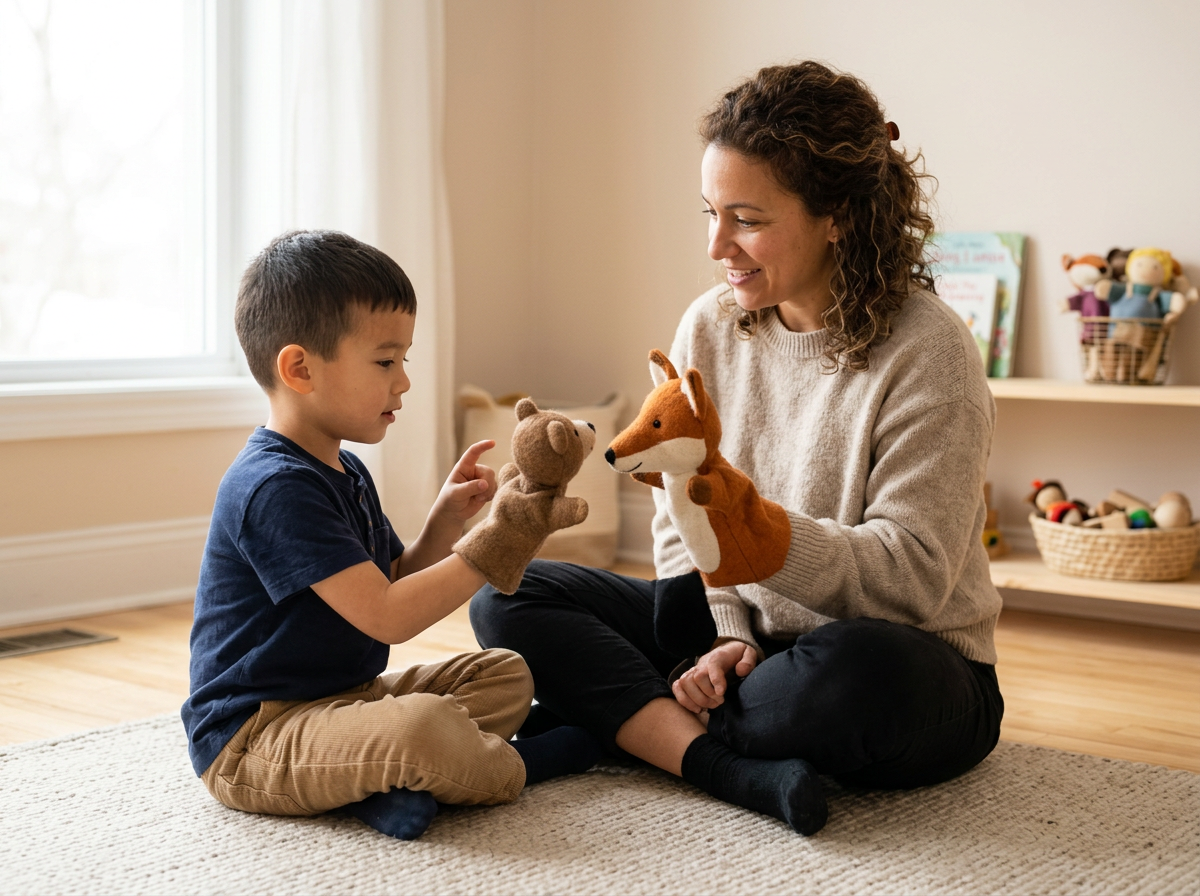
Counselling approaches such as EMDR, Sandtray, or TraumaPlay help slow this cycle down. Through play-based strategies, a therapist helps uncover the real reasons behind your child's behaviour. The goal is to help a child feel safe, teach them how to recognize, name and express their emotions, and process trauma so it no longer causes emotional distress.
How Child Therapy Helps Children Feel Safe Again
All you want for your child is to be healthy and happy. You're not alone. At Canopy Cove, we understand this.
Counselling for children and teenagers gives them a safe space, appropriate to their age, to discover and explore their world. It provides the opportunity to play and explore things they struggle to find words for, whether they are unwilling or unable to express them verbally. They can learn to notice what happens in their bodies when they feel anxious‚ angry‚ scared‚ or overwhelmed․
Therapy provides a space for children to learn how to cope with difficult feelings rather than ignore them․
With a focus on building skills, regulating emotions, and exploring intense reactions to big feelings, therapy creates a relationship in which children feel seen, understood, and accepted.
Therapy may help your child:
process difficult experiences through play
Notice and understand bodily sensations
explore their feelings through stories and play
learn to manage strong emotions
develop more confidence and flexibility
build coping skills
feel secure in sharing tough emotions
strengthen their relationship with their parents‚ and other family members
How Therapy Strengthens the Parent-Child Bond: Healing Happens in Relationships
Remember when your child was a baby, and you could comfort and soothe them simply by taking them in your arms? This doesn't change much as they grow up. Children heal through safe relationships. They need their parents to hold them, both physically and emotionally. To hold space for them to open up and show how they feel. To ask for what they need. To understand what lies beneath their behaviour.
In child and teen therapy, therapists help create a safe space for parents and children to connect, but no therapist can replace the sense of safety and connection your child feels with you.
And this is why parents are so important in child and teen therapy. Through approaches like Emotionally Focused Family Therapy (EFFT), parents become partners․You're not just watching your child's healing process happen. You’re your child’s attachment figure. So, you become one of their greater resources for healing. The therapist helps you understand what is happening beneath your child's behaviour, respond to their emotional needs, and find ways to reconnect when things between you feel difficult.
It is not about "fixing" a child. It is not about "better behaviour."

The goal is to have a child feeling safe, understood, and connected. To help families understand emotions, create secure bonds, strengthen trust, and develop new patterns of interaction. That's why parents are often invited to be part of the therapeutic process. Together, families learn new ways to understand one another, how to repair moments of disconnection, and how to build the secure relationships children need to thrive.
Child and Teen Counselling in Olds, Alberta and Online Across Alberta
If you've been wondering whether your child's behaviour is just part of growing up or a sign that they need extra support, you're certainly not the only parent asking that question.
Here's one thing I'd really like you to remember. Your child doesn't need you to be a perfect parent. They need you to stay with them, especially when they're having a hard time.
You don't have to have all the answers. You don't have to get it right every time. Sometimes, the most important thing you can do is become curious about what your child's behaviour is trying to tell you.
And if that feels difficult, you don't have to do it alone. Counselling gives children and parents a safe place to slow things down, understand what's happening beneath the behaviour, and find their way back to each other.
If you have any questions about starting your journey with a qualified therapist, please reach out for a free 15-minute consultation to find out if this is the right fit for you.